
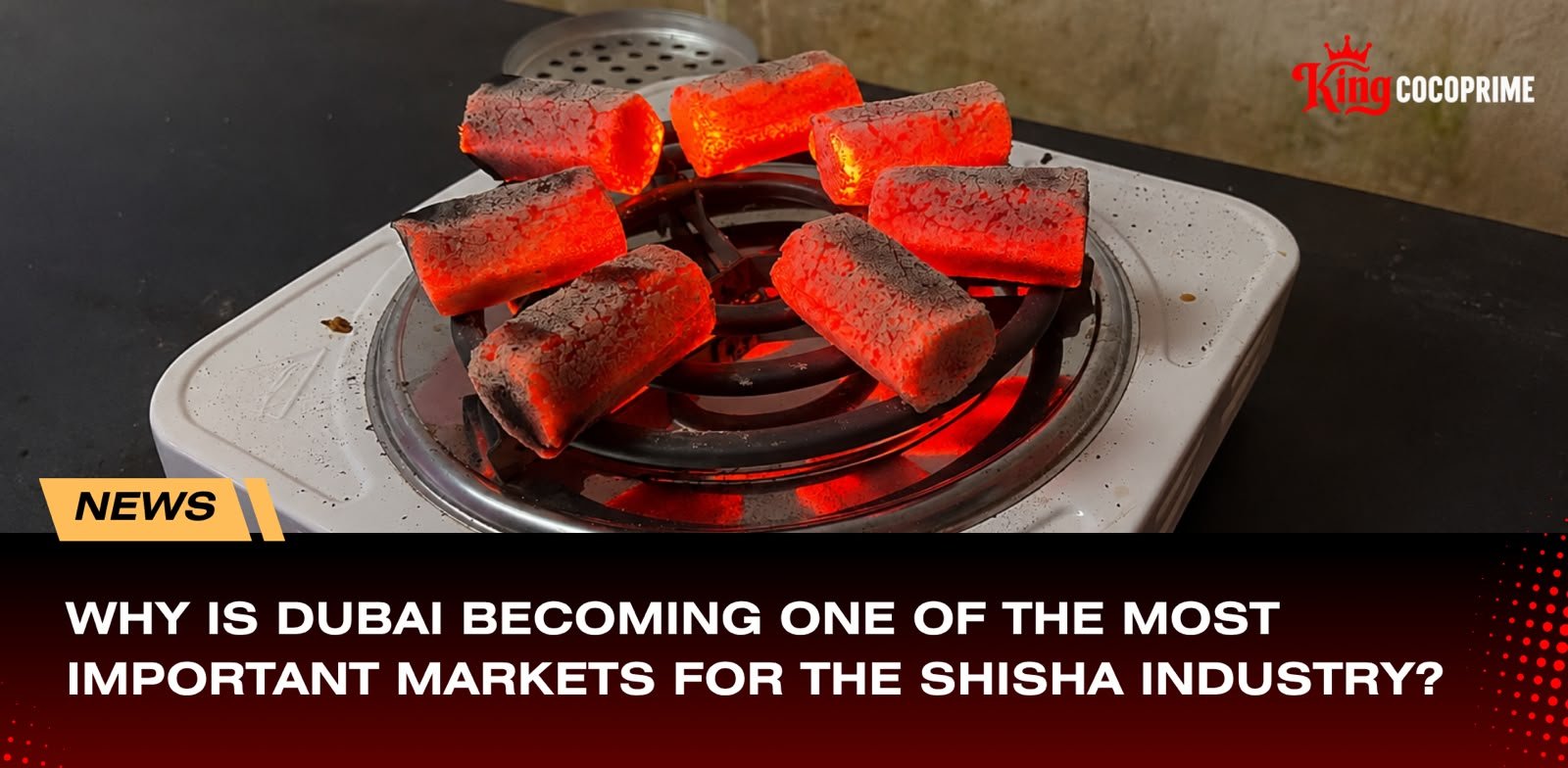
The Middle East has a long-standing connection with shisha culture. Today, that tradition continues to evolve alongside a growing hospitality industry.
Across cafés, lounges, restaurants, hotels, and other hospitality venues, shisha remains an important part of the customer experience. Behind every well-prepared session, however, there is one essential element that often receives less attention than it deserves: charcoal briquettes.
For shisha businesses, charcoal is not simply a supporting product. It plays a direct role in heat control, session stability, service efficiency, and overall consistency.
As a result, businesses increasingly look for shisha charcoal briquettes that offer dependable performance from one session to the next.
More Than Just Charcoal
To the customer, a shisha session may appear simple. A well-prepared bowl, comfortable seating, good company, and the right atmosphere often define the experience.
Behind the scenes, the operational requirements are more demanding.
The charcoal must generate steady heat. It should maintain its performance without requiring constant adjustment. It should remain structurally stable during use and produce a manageable level of ash.
These characteristics become especially important for venues that serve shisha continuously throughout the day.
A small difference in charcoal performance may seem insignificant during a single session. Across dozens or even hundreds of sessions, however, consistency can directly affect service efficiency and the overall customer experience.
For professional operators, reliable charcoal is therefore not a minor detail. It is part of maintaining a consistent standard of service.
Why Briquette Quality Matters
Not all charcoal briquettes perform in the same way.
Raw materials, carbonization, formulation, moisture level, density, compression, shape, and production control can all influence the final product.
These factors affect how a briquette behaves during actual use.
For professional shisha businesses, consistency is one of the most important considerations.
A briquette may look uniform when it arrives, but appearance alone does not determine quality. Buyers need confidence that the charcoal will perform predictably once it is heated and used.
This becomes even more important for businesses that place repeat orders.
A distributor, hospitality operator, or private-label brand needs assurance that future shipments will maintain a similar level of quality and specification.
This is where a dependable shisha charcoal supplier creates real value.
Coconut Shell Briquettes in the Shisha Industry
Coconut shell charcoal briquettes have become widely associated with modern shisha applications because coconut shell charcoal can be processed into compact and uniform briquettes.
The production concept is straightforward. Coconut shells are carbonized, processed, mixed, shaped, dried, inspected, and prepared for commercial use.
The objective, however, is not simply to produce a material that burns.
The real objective is to manufacture a briquette that performs in a controlled and predictable way.
For shisha applications, manufacturers must pay close attention to several production factors, including raw material selection, carbonization quality, moisture control, briquette density, structural strength, and final dimensions.
Each of these factors can influence the way the charcoal performs during use.
For international buyers, this means the manufacturing process matters just as much as the appearance of the finished product.
What Professional Buyers Really Need
Price is naturally an important part of any discussion about coconut charcoal briquettes.
However, price alone does not determine the value of a supplier.
Professional buyers also need to evaluate whether a manufacturer can maintain product specifications, manage repeat orders, support stable production, and prepare shipments consistently.
For distributors, unreliable supply can create inventory problems.
For shisha lounges and hospitality businesses, inconsistent charcoal can affect daily service.
For private-label brands, variations in quality can influence customer trust and brand reputation.
A strong supplier relationship therefore depends on more than the product itself.
It also depends on the supplier's ability to deliver the required product with consistency, professionalism, and operational reliability.
Consistency Builds Buyer Confidence
Consistency is one of the clearest indicators of a well-managed charcoal production process.
Professional buyers expect briquettes to remain consistent in shape, dimensions, density, packaging, and general performance.
Manufacturers should therefore control production carefully to minimize unnecessary variation between batches.
Packaging also plays an important role.
The finished briquettes need adequate protection during storage, loading, transportation, and international shipment. Strong packaging helps reduce the risk of breakage and helps preserve the condition of the product until it reaches the buyer.
For export customers, this becomes particularly important because products may travel thousands of kilometers before arriving at their final destination.
When buyers receive the same standard from one shipment to the next, confidence in the supplier grows.
A Strong Opportunity for Charcoal Manufacturers
The continued importance of shisha across the Middle East creates a significant opportunity for charcoal manufacturers that can offer more than a basic product.
Strong suppliers can build their position around three essential principles:
Quality. Consistency. Reliability.
Quality gives buyers confidence in the product they receive.
Consistency gives buyers confidence that future batches will meet the same expectations.
Reliability gives buyers confidence that repeat orders, production schedules, and export requirements can be handled professionally.
Together, these qualities help transform a simple transaction into a long-term business relationship.
For manufacturers of shisha charcoal briquettes, this distinction is important.
Competing only on the lowest price can create pressure on both quality and long-term sustainability. Building a reputation around dependable production and stable quality gives suppliers a stronger foundation for long-term growth.
Looking Ahead
Shisha remains closely connected to hospitality and social experiences across many Middle Eastern markets, and charcoal continues to play an essential role in that ecosystem.
As professional buyers become more selective, expectations also become higher.
The market is not simply looking for charcoal that burns.
Buyers increasingly value charcoal briquettes that are consistent, practical, properly manufactured, professionally packed, and reliable across repeated orders.
For manufacturers and exporters, this creates a clear opportunity.
The focus should be on producing briquettes that professional buyers can trust while maintaining the same standard from production to production and shipment to shipment.
In the shisha charcoal business, long-term success depends on more than making a sale.
It depends on giving buyers confidence that they can rely on the same product, the same quality, and the same level of service every time they order.